
Vehicle theft and cargo loss are measurable operational risks for fleet businesses, not unpredictable disasters. When a rental van disappears from a lot or a shipment goes missing en route, the immediate asset loss triggers a chain of consequences: insurance claims, replacement costs, customer service disruption, premium increases, and hours spent documenting incidents. For fleet managers overseeing dozens or hundreds of vehicles across dispersed locations, the question is not whether theft will happen, but how quickly you can detect it, how much it will cost, and what you can do to reduce exposure.
Smart fleet management solutions—GPS tracking, telematics platforms, geofencing alerts, and centralized data systems—offer a set of tools to shrink that window of vulnerability. They do not eliminate theft, but they change the equation: faster detection, better recovery rates, clearer documentation for insurers, and visibility into patterns that manual processes miss. The value of these systems depends on how they fit your operational reality, your budget constraints, and your willingness to combine technology with procedure and training.
This article examines the real exposure fleet operators face, explains how connected monitoring works in practice, identifies what tracking software covers and what it does not replace, and outlines concrete steps to reduce theft-related losses without halting operations or overspending on redundant equipment.
Vehicle theft and cargo loss: what fleets are really exposed to
Fleet theft carries two cost layers. The direct loss is straightforward: the replacement value of a stolen vehicle or cargo, minus whatever insurance covers after deductibles and depreciation. The indirect costs often exceed the direct hit. A missing vehicle means a gap in your available inventory, potentially forcing you to turn away bookings or delay shipments. Claims processing consumes staff time and pulls attention from daily operations. If theft becomes a pattern, insurers adjust premiums or tighten coverage terms. Recovery efforts—coordinating with law enforcement, tracking leads, dealing with damaged or stripped vehicles when they turn up—add labor and downtime.
According to the National Insurance Crime Bureau, vehicle thefts in the United States declined 23.2 percent from 2024 to 2025, falling from 850,708 reported thefts to 659,880. While the overall trend moved downward, the sheer volume indicates persistent risk, and fleet vehicles—often parked in predictable locations with high turnover and multiple drivers—can present elevated exposure compared to privately owned cars kept in residential garages.
Cargo theft adds another dimension. Verisk CargoNet reported that cargo theft losses in the United States and Canada reached an estimated 725 million dollars in 2025, a 60 percent increase from the prior year, with the average value per theft climbing 36 percent to $273,990. These figures reflect not just opportunistic pilferage but organized operations targeting high-value shipments, trailers left unattended during stops, and loads in transit across long distances.
Rental and logistics fleets face specific vulnerabilities. Vehicles change hands frequently, keys circulate among staff and customers, and parking arrangements vary by location and hour. A stolen rental vehicle might not be reported immediately if communication between branches is slow or if a late return is initially treated as a customer delay rather than a potential theft. Similarly, a trailer disconnected from its tractor at a distribution yard can vanish overnight if no one performs a physical check before morning dispatch.
Insurance premiums reflect claims history. A fleet with repeated theft incidents may see higher rates or stricter underwriting requirements, including mandates for specific anti-theft equipment or monitoring systems. Demonstrating that you have implemented prevention measures—whether GPS tracking, geofencing, driver training, or documented procedures—can strengthen your position in premium negotiations, though insurers evaluate these measures case by case rather than applying automatic discounts.
How does smart fleet management prevent theft?
Smart fleet management does not physically stop a thief from breaking into a vehicle or driving it away. What it does is compress the time between the theft and your awareness of it, improve the odds of recovery, and create deterrence through the visibility that monitoring provides. The core mechanisms are GPS tracking, telematics data collection, geofencing, and real-time alerting.
GPS tracking places a device in each vehicle that reports its location at regular intervals. If a vehicle moves when it should be parked, or travels outside expected routes, the system logs that movement. Telematics platforms expand this by capturing additional data: ignition status, mileage, speed, idle time, door openings, and diagnostic codes. This flow of information turns each vehicle into a data point you can monitor remotely rather than relying solely on physical checks or driver reports.
Geofencing defines virtual boundaries around specific locations—your depot, customer drop-off zones, approved service areas—and triggers alerts when a vehicle enters or exits those zones outside scheduled hours. If a van leaves the yard at 2 a.m. when no rentals are scheduled, the system notifies you immediately rather than waiting for someone to notice an empty space in the morning. This early warning allows faster response: contacting local law enforcement with current GPS coordinates, remotely disabling the vehicle if the platform supports that feature, or at minimum documenting the theft timeline for insurance and police reports.
Platforms offering car fleet management integrate GPS tracker data with broader operational information—reservations, maintenance schedules, driver assignments, mileage logs, incident reports—creating a single source of truth. This integration surfaces anomalies that isolated systems miss: a vehicle showing no reservation but logging highway miles, a unit marked for service that suddenly appears across state lines, a pattern of after-hours movements from the same parking location. Centralized visibility turns scattered data points into actionable intelligence.
It is essential to distinguish tracking software from active anti-theft devices. The National Highway Traffic Safety Administration categorizes vehicle theft prevention into three types: audible or visible warning devices, immobilization systems that prevent the engine from starting without the correct key or code, and vehicle recovery systems that use electronic transmission to help law enforcement locate stolen vehicles. GPS tracking and telematics fall into the recovery category. They help you find a vehicle after it is taken and provide evidence of unauthorized use, but they do not physically prevent ignition or movement the way an immobilizer does. If your threat profile includes sophisticated theft targeting high-value units, layering GPS tracking with immobilization technology provides complementary protection.
Recovery rates improve measurably when stolen vehicles carry active GPS trackers. While specific rates vary by region, tracker type, and response time, the mechanism is straightforward: law enforcement can pursue a moving target with current coordinates rather than relying on tips, plate readers, or random patrol encounters. Faster recovery often means less damage to the vehicle, lower repair costs, and quicker return to service.
Centralizing fleet data to detect anomalies faster
Scattered tools slow down anomaly detection. If your GPS data lives in one vendor portal, reservation records sit in spreadsheets, maintenance logs exist on paper or in a separate system, and incident reports get filed by email, correlating those pieces requires manual effort. By the time someone notices a discrepancy—a vehicle showing mileage that doesn’t match its booking history, a unit listed as inactive that the GPS tracker says is moving—the gap between event and response has widened.
Centralizing fleet data into a single platform reduces that lag. When mileage, bookings, maintenance status, insurance documents, and GPS coordinates all update in the same system, unusual patterns surface faster. A vehicle marked out of service that suddenly logs ignition-on events triggers an alert. A unit with no outbound reservation accumulating miles outside geofenced areas flags for review. A trailer that has been stationary for three days according to yard logs but shows GPS movement in the last hour prompts immediate investigation.
This centralization also streamlines documentation for insurers and regulators. When a theft occurs, you can pull a complete activity timeline—last known location, last authorized driver, maintenance records confirming tracker installation, geofencing logs showing the exit alert—in minutes rather than assembling fragments from multiple sources over days. Faster, more complete documentation supports claims processing and demonstrates due diligence in prevention.
Platforms like myrentcar illustrate how centralized fleet management works in practice. The software integrates with third-party GPS trackers, pulling location and telematics data alongside operational records: reservations, check-ins, check-outs, damage reports, billing, customer profiles. When a vehicle is overdue or shows unexpected activity, the system consolidates the relevant context automatically. This type of integration does not eliminate theft, but it closes the visibility gap that manual processes leave open, and it reduces the administrative burden of coordinating multiple tools during routine operations and incident response.
Centralization also reveals patterns across your fleet rather than isolated incidents. If multiple thefts occur from the same parking location, or during the same shift, or involving vehicles of a particular make and model, those trends become visible when data aggregates in one place. You can then adjust security measures—relocate parking, change access protocols, add lighting or cameras, prioritize tracker installation on high-risk units—based on evidence rather than guesswork.
Practical steps to reduce theft risk across your fleet
Reducing theft risk starts with understanding where your fleet is actually vulnerable. An audit of current exposure should answer several questions: Which vehicles lack GPS trackers? Which parking locations have experienced theft or vandalism? Which time windows see the highest number of unattended vehicles? Which staff or driver groups have access to keys and how is that access logged? Are high-value units or those in high-theft areas prioritized for monitoring? Answering these questions reveals where incremental investment in tracking, lighting, fencing, or procedural changes will yield the most risk reduction per dollar spent.
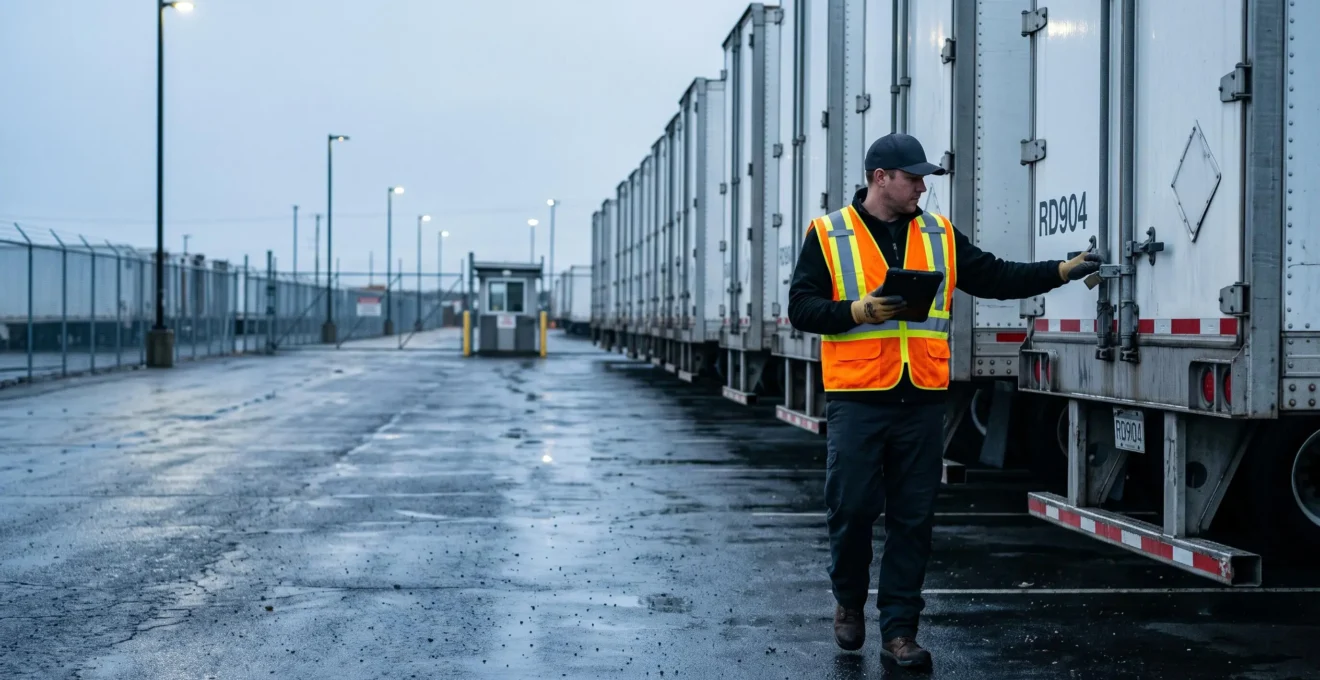
Technology works best when paired with procedures and training. Installing GPS trackers does little if no one monitors the alerts or responds when a geofence is breached. Effective prevention combines equipment with operational discipline: daily physical yard checks to verify vehicle counts match system records, documented key handoff protocols, driver training on reporting suspicious activity or tampering, clear escalation paths when a vehicle goes missing, and regular review of alert logs to catch false positives and adjust thresholds.
Driver and staff training should cover both detection and response. Drivers need to know what to look for—tampered locks, unfamiliar devices attached to vehicles, unusual requests from supposed customers—and how to report it. Yard staff and dispatchers should understand how the tracking system works, what alerts mean, and when to escalate versus investigate internally. If your team treats an after-hours movement alert as routine because false alarms are common, the system loses its value. Refining alert rules based on actual operational patterns keeps the signal-to-noise ratio useful.
Documentation for insurers is not just a post-theft requirement; it is part of prevention. Insurers increasingly expect or require fleet operators to implement specific security measures as a condition of coverage or favorable terms. Documenting what you have in place—GPS tracker serial numbers and installation dates, geofencing configurations, access control logs, staff training records, maintenance of anti-theft devices—demonstrates compliance and supports premium negotiations. Some insurers offer reduced rates or enhanced coverage when fleets meet defined standards; others simply require documentation during claims review. Either way, maintaining organized records saves time and strengthens your position.
- If your fleet is small and vehicles park in a single secure location:
Focus on access control, lighting, and basic GPS tracking on high-value units. A geofencing alert system for after-hours movement provides quick wins without fleet-wide rollout costs.
- If your fleet is distributed across multiple unsecured locations:
Prioritize GPS tracking and centralized monitoring. The visibility gain from knowing real-time locations and receiving movement alerts outweighs incremental physical security improvements at each site.
- If you have experienced repeat thefts in specific areas or vehicle types:
Layer GPS tracking with immobilization devices on those units, audit access logs for those locations, and adjust parking or scheduling to minimize exposure during high-risk hours.
- If your primary concern is cargo theft rather than vehicle theft:
Invest in trailer tracking, door sensors, and route geofencing. Train drivers on secure parking practices during stops and establish check-in protocols at each waypoint.
No technology prevents all theft. Determined criminals with time and tools can defeat GPS trackers by jamming signals, removing devices, or stripping vehicles quickly in hidden locations. The goal is not absolute prevention but measurable risk reduction: faster detection, higher recovery rates, stronger insurance positioning, and deterrence through visible monitoring. Accepting these limits helps set realistic expectations and budget appropriately for layered defenses rather than relying on a single solution.
Can fleet management software really lower your theft losses?
Fleet management software reduces theft-related losses primarily through speed and visibility, not physical prevention. The software does not stop a vehicle from being stolen, but it accelerates detection, improves coordination during recovery, reduces administrative friction in claims processing, and provides data to refine prevention strategies over time. Whether those benefits justify the investment depends on your current loss rate, the cost of downtime, your insurance terms, and the efficiency of your existing monitoring processes.
Measurable outcomes to track include recovery rate—the percentage of stolen vehicles successfully located and returned—time to recovery, reduction in average downtime per theft incident, and changes in insurance premiums or coverage terms when you demonstrate implemented tracking and monitoring systems. Some fleets also measure the reduction in unverified “late return” incidents that turn out to be unreported thefts, as centralized GPS data clarifies whether a vehicle is genuinely with a customer or has gone missing.
The relationship between prevention technology and insurance premiums is not automatic. Some insurers explicitly recognize GPS tracking and telematics in their underwriting, offering lower premiums or better terms for fleets meeting defined standards. Others evaluate prevention measures during claims review or renewal negotiations without offering upfront discounts. Before assuming cost savings, verify with your insurer what documentation they require, what equipment or procedures they recognize, and whether those measures influence premiums or only claims handling. Treating potential insurance benefits as a verified outcome rather than a guaranteed result keeps your ROI analysis realistic.
Compliance and coverage verification required: Fleet management software and GPS tracking provide data and alerts, not legal compliance or guaranteed insurance acceptance. Always confirm with your insurer what specific anti-theft measures they require or recognize, and document your implementation independently. No software platform replaces consultation with legal, insurance, and regulatory advisors for your specific operational context.
Centralized platforms like myrentcar position themselves as efficiency tools that also improve theft response. The company reports outcomes such as 20 percent higher vehicle utilization rates, 33 percent more rebilled ancillary fees, and check-in/check-out times cut in half across their customer base, with over 500 customers in 15 countries. These figures, as communicated by the company, reflect operational benefits beyond theft prevention—streamlined workflows, automated billing, integrated telematics—but the same centralization that drives those efficiencies also tightens the feedback loop for anomaly detection. When a stolen vehicle is also a revenue asset with tracked utilization and scheduled bookings, its absence triggers multiple system flags simultaneously rather than relying on manual discovery.
Is GPS tracking worth it for a small or medium fleet on a limited budget?
GPS tracking delivers the most value when the cost of a single theft—including replacement, downtime, insurance impact, and administrative burden—exceeds the annual cost of tracking the fleet. For fleets with high vehicle turnover, distributed locations, or a history of theft incidents, tracking typically pays for itself after one or two prevented losses or faster recoveries. Start by tracking high-value units or those parked in elevated-risk areas, then expand based on measured results rather than rolling out fleet-wide immediately.
How do I set up geofencing alerts without constant false alarms?
Effective geofencing starts with accurate boundary definitions and realistic time windows. Draw geofence perimeters tight enough to catch unauthorized exits but wide enough to avoid alerts from normal parking variations. Set alerts to trigger only outside scheduled operational hours, or combine movement alerts with ignition status—flag only if a vehicle both exits the geofence and shows ignition-on outside approved times. Review alert logs weekly during the first month, adjust thresholds based on false positive patterns, and train staff to investigate alerts promptly so the system remains trusted.
What should I check before deploying a fleet management solution on an existing fleet?
Verify compatibility with your current GPS trackers or budget for new hardware if the platform requires specific devices. Confirm that the software integrates with your existing reservation, billing, or maintenance systems to avoid creating a new data silo. Assess the installation timeline—can trackers be installed during routine service without pulling vehicles offline, or will deployment disrupt operations? Evaluate training requirements for staff and drivers, data export options if you later switch platforms, and the vendor’s support model for troubleshooting alerts and technical issues.
Does fleet management software lower insurance premiums automatically?
Not automatically. Some insurers offer premium reductions or enhanced coverage for fleets that implement recognized anti-theft measures, including GPS tracking and telematics. Others evaluate prevention measures during claims or renewal without adjusting premiums upfront. Contact your insurer before purchasing equipment to ask what documentation they require, what standards they recognize, and whether compliance influences premiums, coverage terms, or claims handling. Treat insurance benefits as potential, not guaranteed, and document your implementation thoroughly regardless.
What happens when a fleet vehicle or cargo load is stolen despite tracking?
Immediately contact local law enforcement with the vehicle’s last known GPS coordinates, description, and any telematics data showing ignition or movement. Provide your insurer with the complete activity timeline from your tracking system, including geofence alerts, last authorized user, and maintenance records confirming tracker installation. If the platform supports it, remotely disable the vehicle to prevent further movement. Coordinate with the GPS provider to monitor real-time location updates and relay them to law enforcement. Document all communication and actions taken for claims and potential legal proceedings. Recovery speed depends on police response, tracker signal strength, and whether the thief attempts to disable or remove the device.
The decision to invest in fleet management software hinges on whether centralized visibility, faster anomaly detection, and streamlined documentation reduce your total cost of theft—direct losses, insurance impact, administrative burden, and downtime—by more than the software and hardware cost. For fleets already experiencing regular incidents, fragmented data systems, or slow claims processing, the case is often straightforward. For fleets with low historical theft rates and simple operations, the priority may be basic GPS tracking and procedural improvements before committing to a full platform.
When evaluating solutions, focus on integration capability, ease of deployment on your existing fleet, alert customization, data export and ownership, and the vendor’s track record supporting fleets of your size and operational model. A platform that centralizes tracking, reservations, maintenance, and billing delivers broader efficiency gains beyond theft prevention, but only if it fits your workflow and your team actually uses it. A simpler GPS-only solution with effective geofencing may provide better ROI if your primary need is theft detection rather than full operational integration.
Theft prevention is a combination of technology, procedure, and vigilance. GPS tracking and fleet management software provide the visibility layer that manual processes cannot match at scale, but they work best when paired with disciplined operations, trained staff, documented protocols, and realistic expectations about what monitoring can and cannot prevent. The fleets that reduce losses most effectively treat these tools as part of a system, not as replacements for judgment, physical security, or insurance coverage.